Both names show up in the same searches lately, and the framing is usually "which one is better." That is the wrong question. They solve different problems, and the search volume around this comparison keeps climbing precisely because people are picking one for the other's job.
What is each tool actually for?
Claude Code is a terminal-native agent. You run it against a task, it reads the repository, writes code, runs commands, and reports back inside the CLI you already have open. One agent, one job, minimal ceremony.
Google Antigravity is a development platform built for autonomous, multi-step agentic workflows: tool orchestration, file management, and code execution running inside a secure Linux sandbox. It ships as a standalone desktop app, a CLI, a Python SDK, and IDE extensions for VS Code, JetBrains and Zed. The design centre is coordinating several agents doing different things at once, not one agent doing one thing well.
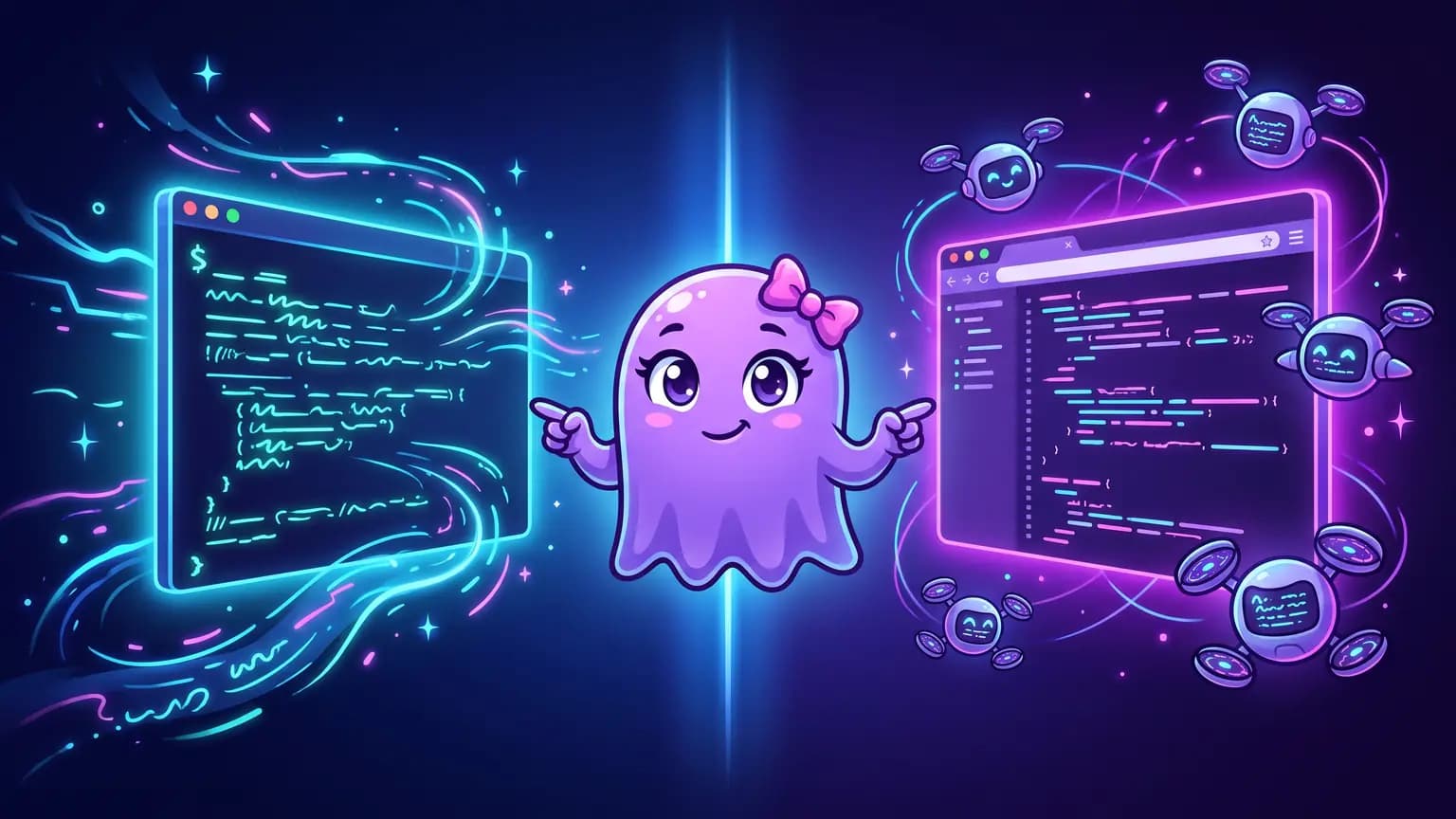
The one-line test. If you are about to describe a single task with a clear start and end, that is Claude Code's shape. If you are about to describe a workflow with branching steps that need to run in parallel or hand off to each other, that is Antigravity's shape. Most of the "which is better" confusion disappears once the task is named correctly.
How do the models compare?
| Claude Code | Antigravity | |
|---|---|---|
| Models | Claude family | Gemini 3.6 Flash (default), Gemini 3.5 Flash, Gemini 3.1 Pro, Claude Sonnet 4.6, Claude Opus 4.6, GPT-OSS 120B |
| Context window | Model-dependent | Up to 1M tokens on Gemini 3.x; GPT-OSS 120B caps at 400K |
| Sandbox | Runs in your shell | Secure Linux sandbox, isolated from your machine |
Antigravity's model list is the more interesting fact here. It runs Claude Opus alongside Gemini and an open-weight model, in the same platform. That is not a competing bet on one model family, it is a router with several bets placed at once.
Which one benchmarks better?
Neither, uniformly. They win at different things.
| Benchmark | What it measures | Leader |
|---|---|---|
| MCP Atlas | Tool orchestration across multiple MCP servers | Antigravity, 83.6% |
| SWE-bench Pro | Production-grade code quality on real repository issues | Claude Opus models |
Read the benchmark, not the leaderboard position. MCP Atlas measures coordinating tools well. SWE-bench Pro measures writing code that survives review. A platform built to orchestrate several agents should lead the first. A model built to be the one doing the writing should lead the second. The result is not a contradiction, it is confirmation that each tool is built for what it says it is built for.
What does each one cost?
Claude Code is priced through Anthropic's plans and API. Antigravity has no standalone subscription: individuals get it free, or through a Google AI Pro ($19.99/month) or Ultra ($100 to $200/month) subscription, with agent quotas that vary by tier. Enterprise access runs through Gemini Enterprise, billed as consumption-based usage on Google Cloud.
That difference matters more than the sticker price. A flat consumer subscription with a quota behaves nothing like consumption-based cloud billing once a workflow runs long or spawns several agents at once. The Antigravity bill for an orchestrated multi-agent run is not the same shape as a single Claude Code session, even at similar token counts.
So which one do you actually pick?
- One task, terminal-first, you want to stay in the loop: Claude Code. It is built for exactly that shape of work.
- A workflow with several agents running different sub-tasks in parallel, inside an IDE: Antigravity. That coordination is its reason to exist.
- You need Claude's code quality but Antigravity's orchestration: that gap is real, and neither tool closes it alone. Antigravity can call Claude Opus as one of its models, which is the closest either gets to combining both strengths.
Both tools share the same underlying constraint: a metered budget shapes what the agent is allowed to attempt. On Verboo Code the models run on dedicated GPU with unlimited tokens, so a long single-agent session and an orchestrated multi-agent run cost the same thing: nothing extra per attempt.
Facts checked against public documentation and benchmark reports on 3 September 2026.