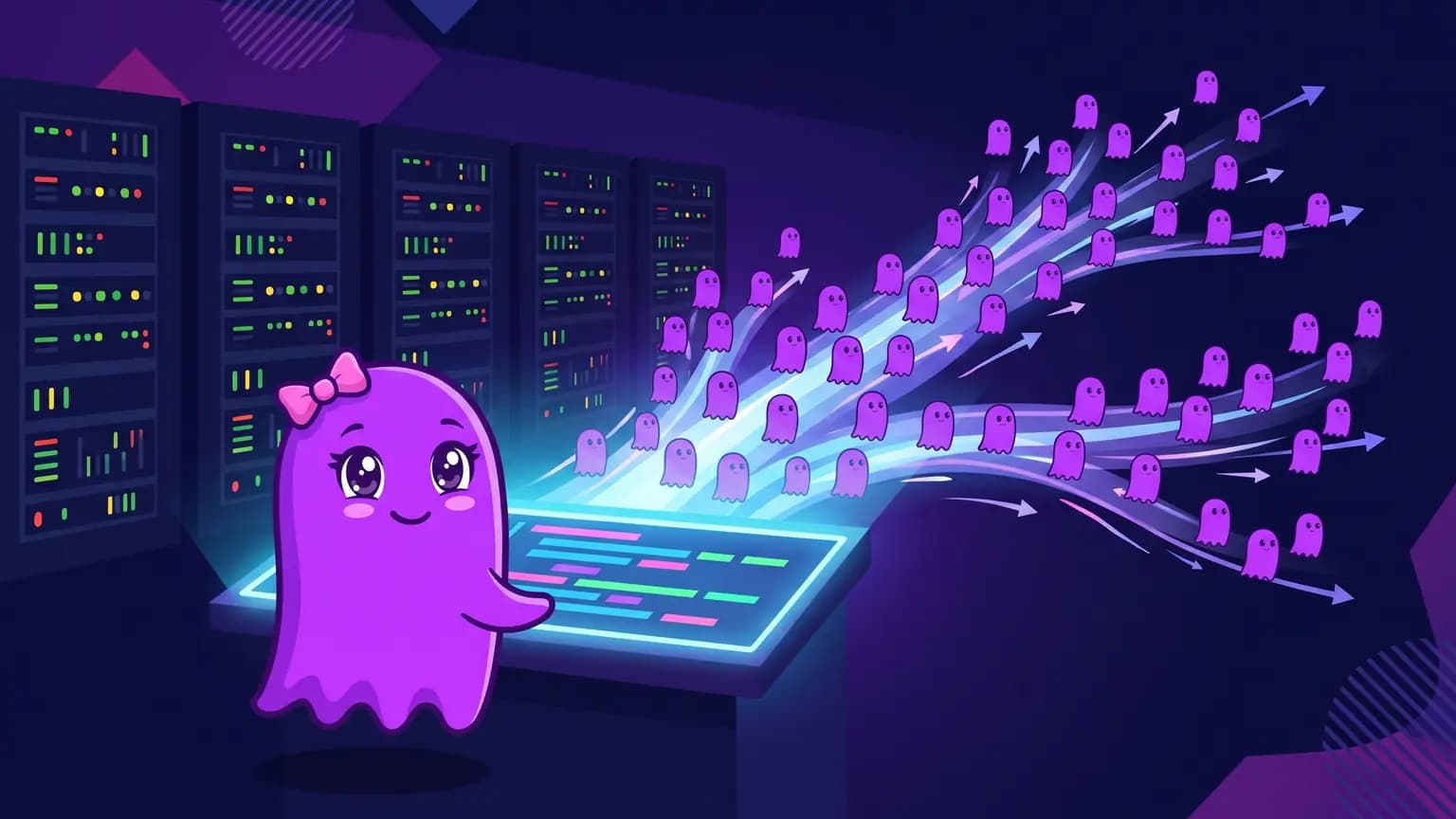
On November 26, 2026, an Ultra plan user asked a [CC] session to run a pre-release audit of their app. The session did not audit: it created and launched a multi-agent workflow on its own. The workflow spawned 708 agents, used 68.3 million tokens in about 9 hours, and consumed 45% of the plan's weekly quota, on the same day the quota had reset. No cost estimate, no confirmation, no cap.
The report is issue #112458 in the anthropics/claude-code repository, opened on 11/26/2026. It is the trigger for this post, and the question it leaves behind is not "is the model good or bad". It is another one: who decides how much an agent can spend when nobody is watching?
What happened in that 708-agent workflow?
The session got an ordinary request and turned it into a cascade. According to the report, it built a workflow with per-model crawlers, scans, and three adversarial Opus verifiers per finding, across 223 findings. The agent count grew until it hit 708. The user killed the run at 549 of 708 agents, after more than 9 hours, and never received a final report. The usage kept counting.
Two details in the report deserve attention. The first: the session itself admitted afterward that launching around 700 agents was a mistake. The second: several agents failed midway with "Connection lost mid-response", so part of the quota was spent on work that never finished.
According to the report, the run never finished: the author had to kill it at 549 of 708 agents, with no final report, and support said the usage would not be restored.
Is it an isolated case or an escalation?
It is an escalation, and the issue author builds the series himself. The same pattern, uncapped fan-out, shows up in four reports across 2026, each larger than the last. All of them are in the anthropics/claude-code repository, opened by different users:
| Date | Issue | Agents | Reported impact | State |
|---|---|---|---|---|
| Jun/2026 | #69213 | 111 | consumed the entire 5-hour window quota, no output | closed |
| Sep/2026 | #95816 | 547 planned | ~36.6 million tokens | open |
| Oct/2026 | #102248 | 137 | ~53% of the weekly quota in 1 hour | open |
| Nov/2026 | #112458 | 708 | ~45% of the weekly quota in ~9 hours | open |
The peak grew from 111 to 708 agents in five months. These are the numbers the reports themselves declare, each one open in the repository to check. What they show is not a counting bug. It is an orchestration behavior that scales on its own when it finds no limit.
But doesn't fan-out work?
It does, and it matters to say that before criticizing the excess. Anthropic itself published, in "How we built our multi-agent research system", that a system with a lead agent and parallel subagents outperformed a single agent by 90.2% on an internal research evaluation. The reason is technical: each subagent has its own context window, so several of them can investigate different sub-questions at the same time without competing for the same space.
But the same text gives the other half of the bill: multi-agent systems use roughly 15 times more tokens than an ordinary conversation. So the technique that solves the context problem is the same one that multiplies the cost. It is good exactly where the spend is justified, and expensive exactly where it is not.
That changes the diagnosis of the 708-agent case. The problem is not using several agents. It is using several agents without anyone defining, beforehand, how many and at what price. The technique was right for a large audit. Governance was missing.
So what is the point that matters?
The point is that uncapped fan-out turns a technical decision into an invoice you discover later. Four things were missing in that case, and are missing in most multi-agent flows we see:
- An estimate before starting. No cost or token figure was shown before the workflow fired.
- Explicit confirmation. The session decided to open hundreds of agents on its own, from a generic request.
- A hard cap. There was no limit on agents or tokens per run.
- A refund when it aborts. The user killed the run without a result and the usage was charged anyway.
None of those four items needs a better model. All of them require the tool to treat spend as something you authorize, not something you find on the statement.
How do you keep agent fan-out under control?
The practical rule is simple: before you let an agent open others, know where to see the usage and how to stop what is already running. In the Verboo Code, four commands cover most of it, and all of them exist in the terminal, with no extra setup.
# see session usage and the plan bars
/usage

# see accumulated cost, to compare before and after
/cost

# list background tasks and stop the ones that went too far
/tasks

# lower reasoning effort when the task does not need the maximum
/effort low
/tasks is what actually solves the 708-agent case in practice: it opens the list of background tasks, with what is running, and lets you end what no longer makes sense. If you cannot see what the agent opened, you cannot stop it. That is why "see and stop" comes before "optimize".
Then comes context, which is what weighs most on usage. /context shows what is filling the window, and /compact summarizes when you need to continue the same task. If the next task has nothing to do with the previous one, /clear cuts the resend for free. And /effort sets the reasoning level between low, medium, high and max, which is the most direct knob to trade depth for cost.
| What you want to control | Command | When to use it |
|---|---|---|
| How much has been used | /usage and /cost | before and after a large task |
| Work open in parallel | /tasks | when the agent spawns several agents |
| What fills the context | /context | when cost rises without you changing anything |
| Reasoning depth | /effort | when the task does not need the maximum level |
| History resend | /compact and /clear | between tasks or when the context grows |
And where does the Verboo Code stand on this?
The position is that fan-out is a good tool with a real cost, and that the cost has to show up before the invoice, not after. An agent that opens hundreds of others with no estimate, no confirmation and no cap is not autonomy, it is spending with no owner. The path is not to forbid several agents. It is to let you see how many are running, stop the ones that went too far, and measure usage with the same command you use for everything else.
If what you want is to keep fan-out visible and interruptible, the Verboo Code measures usage with /usage and shows background tasks with /tasks, in the same terminal you already work in.